

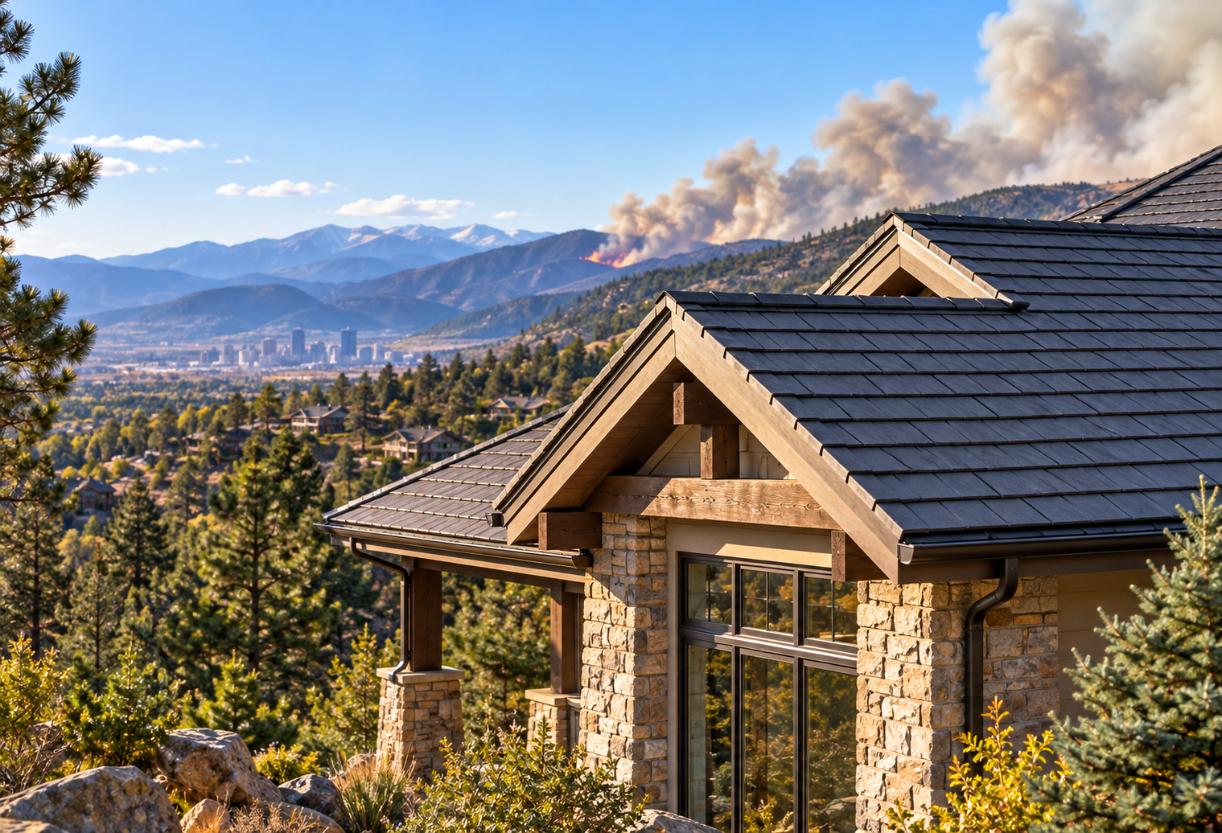
Living along the Denver foothills means enjoying quick access to open space, mountain views, and wooded landscapes, but it also means living closer to areas where wildfire can threaten developed property. For homeowners near the wildland-urban interface, the roof deserves particular attention because wind-driven embers can reach a home well ahead of an active flame front.
Quick answer: Fire-resistant roofing for Denver foothills homes starts with choosing a roof covering with strong fire performance and reducing places where embers can collect or enter the roof assembly. Homeowners should consider the roof covering, roof edges, vents, gutters, debris accumulation, and nearby combustible materials as parts of the same wildfire-resilience strategy.
What local homeowners should know
-
A fire-resistant roof covering can reduce one important vulnerability, but the entire roof assembly and surrounding conditions matter.
-
Homes near foothill communities and open spaces west of Denver can face wind-driven embers even when flames are not immediately adjacent to the structure.
-
Pine needles, leaves, twigs, and other debris accumulated on a roof or in gutters can add combustible material where homeowners least want it.
-
Roof condition matters because damaged or deteriorated areas can create additional vulnerabilities.
-
Roofing decisions should account for applicable local requirements and the specific wildfire exposure of the property.
Why Does Fire-Resistant Roofing Matter in the Denver Foothills?
Fire-resistant roofing matters in the Denver foothills because homes near vegetation, open space, and mountain terrain may be exposed to wind-driven embers during a wildfire. Embers can travel beyond the main fire perimeter, making the materials and details on the exterior of a house important parts of wildfire preparation.
The wildland-urban interface, commonly shortened to WUI, is where homes and other development meet or intermingle with undeveloped vegetation. That description applies to many settings along Colorado’s Front Range, particularly as development extends toward the foothills.
For homeowners around communities such as Golden, Morrison, Lakewood, and Evergreen, roofing choices should reflect that local environment. Jefferson County includes everything from dense suburban neighborhoods to heavily vegetated foothill properties, so wildfire exposure can vary considerably from one address to another.
Quality Roofing Co. can help homeowners evaluate roofing options based on the needs of their property. We look at the roof as a system rather than focusing only on the visible shingles or other surface material.
What Should Denver Foothills Homeowners Know About Local Wildfire Exposure?
Denver foothills homeowners should know that wildfire exposure is highly property-specific, with vegetation, terrain, wind, roof condition, and surrounding combustible materials all affecting vulnerability. A house near open space or wooded terrain may have different roofing considerations than a home several miles east in a more densely developed neighborhood.
Colorado’s Front Range experiences dry periods, strong winds, intense sun, snow, and seasonal temperature swings. Those conditions make regular exterior maintenance useful even outside wildfire preparedness.
From a roofing perspective, homeowners should pay attention to how debris collects around valleys, roof-to-wall intersections, gutters, skylights, and other transitions. These areas can be easy to overlook from the ground.
Professional field observation is also valuable because two apparently similar foothills homes can have very different exposures. One may sit beside dense vegetation, while another has greater separation from combustible surroundings.
How Can Wildfire Exposure Affect a Roof?
Wildfire exposure can affect a roof through airborne embers, radiant heat, nearby burning materials, and direct flame contact in more severe situations. For many homeowners, ember exposure is especially important because small burning particles can land on roofs and accumulate in vulnerable areas.
Potential warning signs and risk factors include:
-
Leaves, pine needles, or twigs collecting in roof valleys.
-
Gutters repeatedly filling with combustible debris.
-
Missing, loose, cracked, or deteriorated roofing materials.
-
Gaps or damaged components around roof edges and penetrations.
-
Aging roof sections that have not been professionally evaluated.
-
Combustible materials accumulating immediately beside the structure.
-
Roof areas that are difficult to inspect or maintain safely.
These conditions do not mean a home will be damaged during a wildfire. They indicate areas worth evaluating as part of broader property maintenance and wildfire preparation.
When Should You Call a Roofing Professional?
You should call a roofing professional when evaluating fire-resistant roof materials, replacing an aging roof, repairing damaged components, or inspecting areas that cannot be safely assessed from the ground. Denver-area homeowners can perform basic visual checks, but climbing onto steep or elevated roofs creates unnecessary fall risk.
From the ground, homeowners can watch for obvious missing materials, sagging gutters, accumulated debris, and visible storm damage. Binoculars can sometimes provide a better view without requiring roof access.
A professional inspection becomes more useful when there are questions about material condition, flashing, roof penetrations, ventilation components, or whether repair or replacement is appropriate.
For foothill properties, an inspection can also identify places where debris tends to accumulate and where routine maintenance deserves greater attention.
What Are Common Roofing Vulnerabilities in the Denver Foothills?
Common roofing vulnerabilities in the Denver foothills include combustible debris, deteriorated roof coverings, exposed gaps, aging components, and roof details where embers or debris may collect. Local weather can compound these concerns by gradually wearing roofing materials and creating maintenance needs.
A few conditions deserve particular attention.
1. Debris accumulation: Pine needles, leaves, and twigs can gather in valleys and gutters, especially on properties surrounded by mature vegetation.
2. Weather-related wear: Sun exposure, snow, wind, hail, and temperature changes can contribute to roofing deterioration over time.
3. Aging materials: An older roof may have damaged or worn components that deserve evaluation regardless of wildfire risk.
4. Complex rooflines: Intersections, valleys, dormers, and other architectural details can create additional locations for debris accumulation.
5. Nearby combustible materials: Roofing is only one part of the home’s exterior. Conditions immediately around the structure can influence overall wildfire vulnerability.
How Can Homeowners Maintain a More Fire-Resistant Roof?
Homeowners can support a more fire-resistant roof by keeping it clean, repairing damage promptly, maintaining gutters, and having aging roofing components evaluated before wildfire conditions become a concern. In the foothills west of Denver, routine maintenance is particularly useful where trees and vegetation regularly shed debris.
Safe maintenance can include visually checking the roof after major weather events and keeping accessible ground-level drainage areas clear. Homeowners should also monitor trees and vegetation around the house as part of a broader property-maintenance plan.
DIY work should stop when maintenance requires walking on a steep roof, working near electrical hazards, removing roofing materials, or diagnosing structural or installation problems.
Spring can be a practical time to assess winter wear, while inspections after severe hail or wind events may identify damage that should be addressed before it worsens.
What Results Can You Expect From Fire-Resistant Roofing Improvements?
Fire-resistant roofing improvements can reduce specific roof vulnerabilities, but no roofing system can make a Denver foothills home completely wildfire-proof. The realistic goal is to improve resistance to fire exposure while addressing maintenance issues that could make the roof more susceptible to damage.
Replacing vulnerable or deteriorated roofing can also improve the overall condition of the building envelope. Professional service may identify related issues involving flashing, drainage, penetrations, or damaged components.
The best outcome is a roof system appropriate for the home, local conditions, and applicable requirements, combined with ongoing maintenance around the structure.
What Mistakes Should Foothills Homeowners Avoid?
Foothills homeowners should avoid treating a fire-resistant roof covering as the only wildfire precaution their property needs. Roofing is an important component, but debris, openings, maintenance, vegetation, and conditions immediately surrounding the house also deserve attention.
Mistake: Choosing material based only on appearance.
Consequence: A homeowner may overlook fire performance and suitability for the property’s exposure.
Better approach: Compare roofing options using performance, condition, local requirements, maintenance, and appearance.
Mistake: Ignoring roof debris.
Consequence: Leaves and pine needles can remain in valleys or gutters.
Better approach: Include debris monitoring in routine seasonal maintenance.
Mistake: Waiting for obvious leaks before inspecting an older roof.
Consequence: Deterioration may progress without producing an immediate interior symptom.
Better approach: Have questionable or aging components evaluated before problems become more extensive.
Mistake: Assuming every foothills property has identical risk.
Consequence: Property-specific factors may be overlooked.
Better approach: Evaluate the actual terrain, vegetation, roof configuration, and surroundings.
What Is a Common Denver Foothills Roofing Scenario?
A common Denver foothills roofing scenario is a home near mature trees or open space where seasonal debris repeatedly accumulates on a roof that has already experienced years of sun, snow, hail, and wind. The homeowner may begin thinking about wildfire resistance only when replacement or major repair is already being considered.
This is not a case study of a specific Quality Roofing Co. customer. It illustrates why roof replacement can be an opportunity to consider more than color and appearance.
Instead of simply replacing the existing surface, the homeowner can discuss material fire performance, current roof condition, vulnerable details, ventilation components, drainage, and ongoing maintenance needs.
Which Roofing Services Can Help Reduce Vulnerability?
Roof inspections, targeted repairs, maintenance, and roof replacement can address different vulnerabilities depending on the condition of the home. A relatively young roof with localized damage may need a different solution than an aging system approaching replacement.
An inspection can establish the current condition. Repairs can address specific damaged areas where appropriate. Maintenance helps manage debris and deterioration, while replacement provides an opportunity to evaluate roofing materials and system details more comprehensively.
How Do Repair and Replacement Compare?
Repair is generally appropriate for localized, repairable problems, while replacement may make more sense when deterioration is widespread or the homeowner wants to change the roofing system itself. The right decision depends on roof condition rather than wildfire concerns alone.
A repair can address specific damaged materials or components without replacing a serviceable roof. Replacement is a larger project, but it creates an opportunity to evaluate the roof covering and associated details together.
For homeowners near Golden, Morrison, or the foothills beyond Lakewood, a professional assessment can help determine which approach fits the actual roof instead of assuming replacement is automatically necessary.
What Areas Around Denver Have Similar Roofing Concerns?
Homes along Denver’s western edge and nearby foothill communities can share roofing concerns related to vegetation, wind, hail, snow, and wildfire exposure. Relevant areas can include parts of Jefferson County and communities such as Golden, Morrison, Lakewood, and Evergreen, depending on the property’s specific setting.
Conditions change quickly between urban neighborhoods, open-space edges, and mountain properties, so recommendations should remain property-specific.
What Can Happen If Roof Vulnerabilities Are Ignored?
Ignoring roof vulnerabilities can allow ordinary wear, debris accumulation, and existing damage to become more significant over time while leaving preventable weaknesses unaddressed. For Denver foothills homeowners, delaying routine roof care can also mean entering periods of heightened wildfire concern without knowing the condition of the roof.
The goal is not to create fear around wildfire risk. It is to identify practical improvements before an emergency makes routine roofing work more difficult.
FAQ About Fire-Resistant Roofing in the Denver Foothills
What roofing is considered fire-resistant?
Fire-resistant roofing uses materials and assemblies designed and tested for resistance to fire exposure. Specific classifications and performance depend on the product and roof assembly, so homeowners should review the documented fire rating of a proposed roofing system and confirm that it is suitable for applicable local requirements.
Do Denver foothills homes need special roofing because of wildfire risk?
Some Denver foothills homes warrant additional wildfire-focused roofing considerations because their exposure differs from that of a typical urban property. Vegetation, nearby open space, terrain, wind exposure, and local requirements can all influence what makes sense. Homeowners should evaluate the individual property rather than assuming one recommendation applies everywhere.
Is a fire-resistant roof wildfire-proof?
No, a fire-resistant roof is not wildfire-proof. Fire-resistant roofing can reduce certain vulnerabilities, but wildfire exposure can involve embers, radiant heat, nearby combustible materials, and other parts of the structure. Roof improvements are best viewed as one component of broader property preparation.
Why are pine needles a concern for foothill roofs?
Pine needles can collect in valleys, gutters, and roof intersections, adding combustible debris to areas exposed to airborne embers. Properties around Evergreen and other wooded foothill areas may require particularly regular monitoring because nearby vegetation can continually deposit new material onto the roof.
Should I replace my roof solely because I live near Golden or Morrison?
No, location alone does not mean a roof needs replacement. Homeowners near Golden or Morrison should base replacement decisions on roof condition, material performance, property exposure, applicable requirements, and professional evaluation. A serviceable roof may need maintenance or repairs rather than complete replacement.
How often should I check my roof for debris in Jefferson County?
Check often enough to prevent significant debris accumulation, with timing based on the vegetation surrounding your Jefferson County property and recent weather. Homes under or near mature trees may need more frequent observation. Use ground-level visual checks and leave unsafe roof access or cleaning to qualified professionals.
Does hail damage affect wildfire-resistant roofing performance?
Hail can damage roofing materials and should be evaluated separately from wildfire resistance. Denver and Front Range properties can experience severe storms, so homeowners should watch for visible damage after significant weather. A roof’s fire characteristics do not eliminate the need to repair storm-related deterioration.
Can I inspect my Denver roof for wildfire vulnerabilities myself?
You can safely perform a basic Denver roof check from the ground, but detailed roof evaluation is better handled by a professional. Look for missing materials, heavy debris, damaged gutters, and obvious deterioration. Avoid climbing onto steep, wet, icy, or otherwise unsafe roofing surfaces.
Protect Your Foothills Home With a Roof Built for Local Conditions
Wildfire preparation around the Denver foothills involves more than any single product, but the roof is a practical place to evaluate vulnerability. Understanding roof condition, fire performance, debris accumulation, and property-specific exposure can help homeowners make more informed repair and replacement decisions.
Build More Wildfire Resilience Into Your Roofing Plan
We can help you evaluate your existing roof and discuss roofing options suited to local foothill conditions.