
Flat roofs are a defining feature of commercial architecture across Denver and the broader Colorado region. They offer practical advantages in terms of space, drainage planning, and HVAC placement. But they also come with a well-known vulnerability: without proper maintenance and protection, they deteriorate faster than pitched roofs, leaving building owners facing expensive repairs or full replacements long before they should have to. The good news is that modern commercial roof waterproofing solutions, particularly high-performance coatings, have made it possible to dramatically extend the serviceable life of a flat roof without tearing everything off and starting over.
If you manage or own a commercial property in Denver, understanding your coating options could save you tens of thousands of dollars and add a decade or more to your existing roof system.
Why Flat Roofs in Denver Face Unique Challenges
Denver sits at over 5,000 feet above sea level, and that elevation brings with it a distinct set of environmental stressors that flat roofs must endure year-round. Ultraviolet radiation is significantly more intense at altitude than at sea level, which accelerates the breakdown of roofing membranes, sealants, and surface materials. Add to that the dramatic temperature swings Colorado is known for, where a single day can see temperatures rise and fall by 40 degrees or more, and you have a recipe for chronic thermal cycling that stresses roofing materials to their limits.
Denver also experiences a freeze-thaw cycle that can be particularly damaging to flat roofs. Water that pools on an uncoated or poorly maintained roof can seep into small cracks, freeze overnight, and expand those cracks further with each cycle. Over a few seasons, what started as a minor surface imperfection becomes a significant leak pathway. These conditions make flat roof restoration not just a smart financial decision but a necessary part of responsible property management in Colorado.
The combination of intense UV exposure, temperature extremes, hail events, and seasonal moisture creates an environment where unprotected flat roofs tend to age quickly. Building owners who ignore this reality often find themselves replacing roofs every 12 to 15 years. Those who invest in quality coatings can often push that number to 25 years or beyond.
What Are Elastomeric and Silicone Roof Coatings?
The term “elastomeric” refers to a category of coatings that can stretch and return to their original shape without cracking or tearing. This elasticity is what makes elastomeric coatings for Denver buildings so valuable. As the roof membrane expands in summer heat and contracts in winter cold, an elastomeric coating moves with it rather than cracking under the stress.
Silicone roof coatings are among the most popular and well-regarded options in this category. Applied as a liquid, silicone cures into a seamless, fully adhered membrane that is highly resistant to standing water, UV radiation, and temperature extremes. Unlike some other coating types, silicone does not degrade when exposed to prolonged ponding water, which is a critical advantage for flat roofs that do not drain perfectly. For commercial properties in Denver, where afternoon rainstorms and spring snowmelt can leave water sitting on a roof for hours or days, this characteristic is particularly important.
Silicone coatings are also reflective by nature. A white or light-colored silicone coating can reflect a significant portion of solar radiation away from the building, reducing heat absorption and lowering cooling costs during Denver’s warm summers. This energy efficiency benefit is an added value on top of the protective function the coating provides.
Other elastomeric options include acrylic coatings, which perform well in low-moisture environments and offer excellent UV resistance, and polyurethane coatings, which provide superior impact resistance and are often used in areas with heavy foot traffic or hail exposure.
The Flat Roof Restoration Process
Choosing commercial roof waterproofing through a coating system is not simply a matter of rolling product onto an existing surface. A proper flat roof restoration follows a defined process that determines whether the coating will perform as intended for its full expected lifespan.
The first step is a thorough inspection and condition assessment. A qualified roofing contractor will evaluate the existing membrane for delamination, moisture infiltration, blistering, and seam failures. In some cases, infrared scanning is used to detect trapped moisture beneath the surface. Sections with significant moisture saturation may need to be cut out and replaced before coating begins, because applying a coating over wet substrate will cause it to fail prematurely.
Once the roof surface is confirmed to be in acceptable condition, cleaning is the next critical step. Contaminants including dirt, algae, grease, and oxidized material must be removed, typically through pressure washing or chemical cleaning. Any cracks, gaps, or failed seams are then addressed with compatible sealants or reinforcing fabric before the coating is applied.
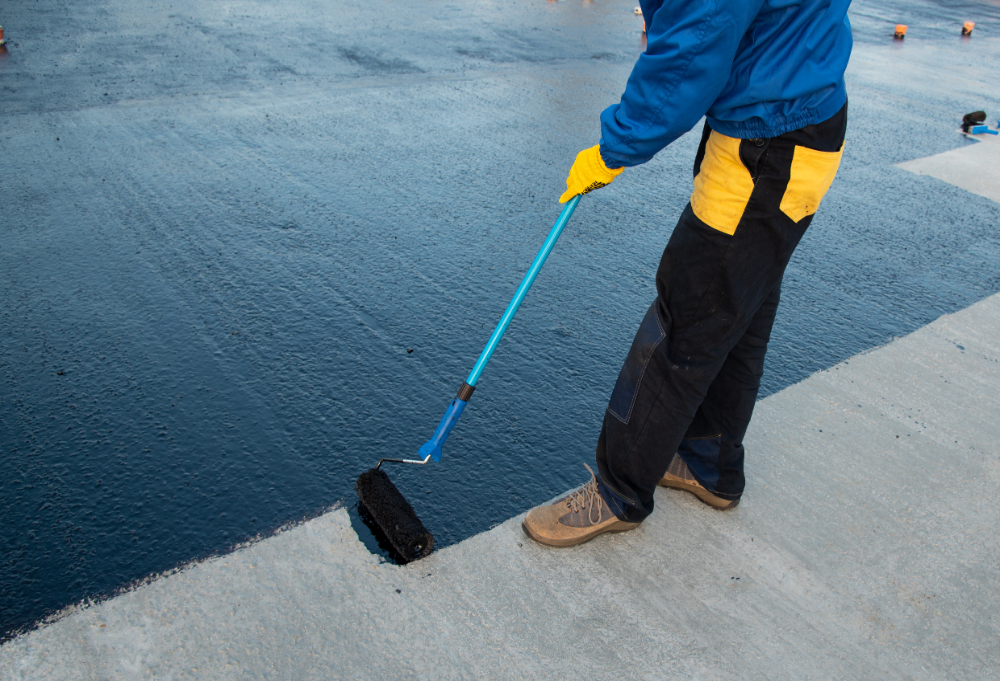
The coating itself is usually applied in two or more passes to achieve the specified dry film thickness. Thickness matters enormously with silicone roof coatings and other elastomeric products. Too thin, and the coating will not provide adequate waterproofing or longevity. A reputable contractor will measure wet and dry film thickness to ensure specification compliance throughout the project.
When done correctly, a properly applied elastomeric or silicone coating can be expected to last 10 to 15 years before needing a recoat. At that point, rather than replacing the entire roof, the building owner can simply have the coating cleaned and recoated, extending the life of the underlying system for another decade.
Choosing the Right Coating Contractor in Denver, Colorado
Not all roofing contractors have the same level of experience with commercial roof coatings, and in a market like Denver where the environmental demands are high, selecting the right professional is essential to getting the results you expect.
Look for contractors who have manufacturer certifications for the specific coating products they recommend. Most major silicone and elastomeric coating manufacturers offer certification programs that ensure applicators have been trained in proper surface preparation, application techniques, and quality control. A certified contractor can also often offer extended manufacturer-backed warranties that non-certified applicators cannot provide.
Ask for documentation of completed commercial projects in Colorado, specifically in conditions similar to your building. Denver’s UV intensity, hail exposure, and thermal cycling are factors a contractor should be able to speak to with real experience. References from comparable projects are worth pursuing.
Get detailed written specifications that outline surface preparation requirements, primer usage, coating product and mil thickness, number of coats, and warranty terms. Comparing bids that lack this level of detail is comparing apples to oranges. A low price that does not include adequate surface preparation or proper film thickness is not a savings; it is a cost deferred to an early failure.
Also consider the contractor’s approach to drainage. One of the most effective improvements a coating project can include is the addition or improvement of roof drains and tapered insulation to eliminate chronic ponding areas. Eliminating standing water before applying a silicone or elastomeric coating improves long-term performance significantly.
Conclusion
For commercial property owners in Denver and across Colorado, flat roof restoration through high-performance coatings represents one of the most cost-effective investments available in building maintenance. Silicone roof coatings and elastomeric coatings for Denver buildings address the specific environmental challenges of the region while delivering measurable returns through extended roof life, reduced energy costs, and avoided replacement expenses. When properly specified and applied by a qualified contractor, commercial roof waterproofing systems can reliably add 10 or more years to a flat roof, turning a potential liability into a protected long-term asset.
Need a Trusted Roofing Contractor Near You?
At Quality Roofing Co., we’re proud to bring over 15 years of trusted roofing experience to homeowners and businesses across Denver, CO. From quick roof repairs and shingle work to full roof replacements and advanced flat roofing systems, our team delivers durable, detail-driven results you can count on. We’re committed to your satisfaction every step of the way, whether you’re dealing with an unexpected roofing emergency or planning a major renovation. Reach out to us today and let us protect your property with the dependable craftsmanship you deserve.